Why APIs Are The brand new Consumer Interfaces By Gustavo Woltmann
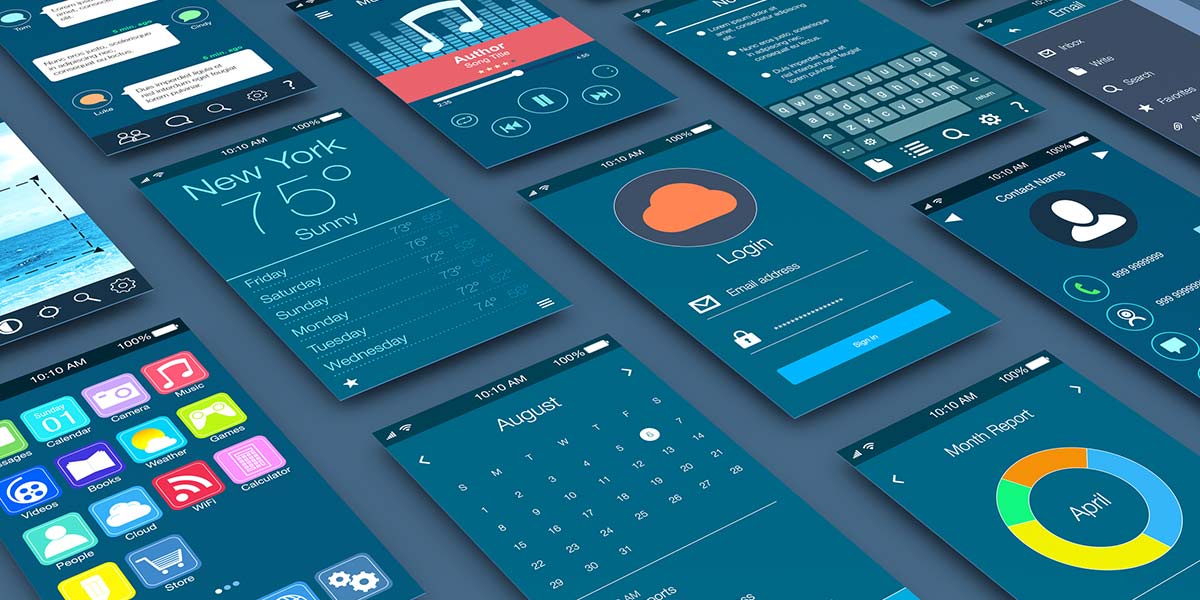
In the world of contemporary software package, person encounter not lives only on screens. Progressively, it resides while in the invisible connections concerning systems—These streams of data and commands that make digital ecosystems function. These connections are created possible by APIs (Software Programming Interfaces), that have progressed from technological applications for builders in the new frontiers of consumer conversation. Nowadays, APIs tend to be the unseen interfaces shaping how people practical experience know-how, even if they under no circumstances contact a button. I am Gustavo Woltmann, developer with 20 yr encounter, let's check how meaninghul APIs are now.
From Screens to Units
For many years, consumer interfaces had been defined by what buyers could see and contact—buttons, icons, menus, and screens. The art of user working experience revolved all-around building these visual layers intuitive and delightful. But as digital ecosystems expanded, a silent revolution began beneath the area. A very powerful interactions have been no longer going on involving people and screens, but in between purposes and programs.
Enter the API—Application Programming Interface—the invisible spine of contemporary software program. Instead of guiding human clicks, APIs determine how techniques communicate. They empower apps to share details, bring about actions, and coordinate complex jobs immediately. In this new fact, the boundaries in between platforms blur: your experience-sharing app connects towards your map provider, your weather widget pulls facts from a meteorological server, and also your Physical fitness tracker syncs seamlessly with all your mobile phone.
This behind-the-scenes connectivity has quietly redefined what “consumer experience” signifies. While end users interact through a graphical interface, the real experience typically depends on how properly APIs Trade info from the background. A flawless transaction, quick update, or serious-time notification occurs mainly because APIs are Operating flawlessly alongside one another.
Because of this, modern-day software advancement is shifting its priorities. The Visible layer—the monitor—is still crucial, but it really’s no longer The entire Tale. The standard of the experience now depends equally about the invisible architecture that powers it. Enterprises that once focused exclusively on UI layout at the moment are investing closely in API style, recognizing that dependability, pace, and integration push purchaser gratification as much as aesthetic attraction.
From screens to programs, know-how has become much less about what we see and more about how every little thing connects. The way forward for consumer practical experience is not merely Visible—it’s structural, seamless, and run via the silent intelligence of APIs Doing the job at the rear of each individual faucet, simply click, and swipe.
APIs as Invisible UX
In currently’s linked digital entire world, by far the most seamless consumer encounters usually transpire devoid of people noticing it. Guiding just about every quick login, one particular-simply click payment, or authentic-time update lies a community of APIs—the unseen interfaces that condition how technological know-how feels. Though common style and design focuses on what customers can see, API design establishes how efficiently every little thing functions.
APIs are getting to be the invisible layer of consumer expertise, orchestrating interactions across platforms and products. Whenever your social media application quickly pulls your pictures within the cloud or your banking application syncs completely with all your budgeting application, you’re benefiting from thoughtful API structure. The responsiveness, dependability, and regularity of People connections define the general encounter about visual structure or navigation at any time could.
Poorly made APIs, However, can crack that illusion of effortlessness. A slow integration, mismatched details, or program failure makes friction similar to a buggy interface would. That’s why many foremost companies now take care of APIs as Main UX elements, not merely backend resources. Their style and design should prioritize clarity, predictability, and security—qualities that guarantee builders can Develop trusted attributes, and end users can enjoy flawless functionality.
For contemporary developers, crafting a fantastic API is really an act of user-centered design and style—just the “buyers” are frequently other builders. In depth documentation, constant endpoints, and intuitive logic make APIs simpler to undertake and combine, fostering better finish-consumer activities.
In this manner, APIs have redefined what this means to style for usability. They change interactions into fluid, linked ordeals that transcend screens. As units carry on to communicate far more specifically with one another, APIs are rising as The brand new frontier of UX—one in which by far the most wonderful interface may be the 1 consumers in no way see.
The Rise on the API-Initially Environment
Up to now, software was built Using the user interface initial—a screen, a menu, a visual layout—while the fundamental units arrived afterwards. Currently, that buy has flipped. We now are in an API-1st entire world, in which programs are developed from the inside out, commencing with the info and logic that push every single interaction.
An API-very first method indicates builders start out by defining how devices converse just before they even Develop the user-struggling with levels. This attitude ensures that every assistance—no matter if it’s authentication, payment processing, or analytics—might be reused, scaled, and integrated throughout a number of platforms. As opposed to creating for only one interface, firms layout for an ecosystem of connections.
The result is agility and interoperability. Fashionable corporations function throughout units, cloud solutions, and 3rd-get together integrations, and APIs make that complexity workable. They permit startups to plug into global infrastructures like Stripe, Google Maps, or OpenAI within just hrs in lieu of months. This accelerates innovation and stages the taking part in industry, enabling tiny groups to create sophisticated items that rival enterprise application.
For organizations, the shift to API-first layout isn’t just technical—it’s strategic. It encourages modular architecture, constant supply, and less difficult collaboration between teams. APIs develop into the contract of conversation between inner units and external companions, furnishing balance within an at any time-altering electronic landscape.
Inside of a globe pushed by automation and connectivity, APIs are now not an afterthought—they’re the foundation. They electricity all the things from logistics networks to intelligent residences, reworking how software program is created, managed, and experienced. The rise on the API-to start with globe represents a elementary improve in how technologies evolves: considerably less about screens and clicks, and more details on how every method talks, shares, and grows collectively.
Collaboration, Automation, and The brand new UX
As APIs acquire Centre phase in modern software program, click here they’re not only enabling technological innovation—they’re reshaping how persons and units collaborate. Within an API-pushed ecosystem, collaboration extends further than groups and tools to the extremely architecture of digital goods. APIs act because the bridges among companies, automating workflows and generating activities that come to feel very easily linked.
Think of how nowadays’s productiveness resources perform: your calendar syncs along with your video clip conferencing app, your messages trigger project updates, plus your data files are mechanically backed up throughout platforms. None of this happens manually—it’s run by APIs Doing the job quietly from the qualifications. This invisible collaboration provides rise to a completely new style of consumer expertise, one that values automation and integration around regular interface layout.
For developers and product groups, APIs also redefine collaboration internally. As an alternative to siloed techniques, teams do the job from a shared foundation of reusable factors. Designers, engineers, and analysts can Create and refine goods at the same time, working with APIs because the connective tissue that retains all the things aligned and regular. This modular method hastens iteration, lowers redundancy, and helps make products far more adaptable to change.
Within the consumer’s standpoint, the top digital activities are those that foresee needs and take away friction. APIs make that feasible by enabling authentic-time information move and automation—regardless of whether it’s smart suggestions, prompt payments, or contextual notifications.
While in the period of collaborative automation, the user practical experience is no longer confined to your screen or an individual software. It lives while in the seamless coordination between programs. APIs are the unseen collaborators, empowering people and devices to operate in sync. The new UX is just not pretty much creating interfaces—it’s about coming up with interactions between ecosystems, the place automation and collaboration determine what “person-pleasant” actually usually means.
Creating the way forward for Invisible Interfaces
As APIs go on to weave together the digital entire world, They are really paving the way for any long run where by interfaces might disappear entirely. The subsequent technology of person experience won’t count on screens or buttons—it is going to rely upon seamless, context-knowledgeable interactions made feasible by smart, interconnected techniques driven by APIs.
Invisible interfaces are previously below in refined sorts: a voice command that orders groceries, a smartwatch that adjusts your thermostat, or an application that implies the most beneficial route before you even ask. These experiences are constructed not on standard design and style aspects but on knowledge circulation, automation, and integration—all orchestrated by way of APIs.
Coming up with for this long run needs a shift in pondering. As an alternative to concentrating on what consumers see, designers and developers must consider how systems understand and answer. The emphasis moves from Visible format to behavioral logic—crafting interactions which can be anticipatory, all-natural, and trustworthy. Successful API structure will copyright on clarity, protection, and adaptability, making certain that invisible interactions stay reliable and respectful of person intent.
This change also redefines creativity in technology. The designers of tomorrow will condition ecosystems, not simply encounters. They’ll need to consider how distinct solutions, sensors, and data resources collaborate to type a unified, human-centered system.
During this entire world, APIs grow to be the architects of invisibility. They enable frictionless, predictive activities exactly where the interface fades absent along with the interaction by itself gets to be the products. As we go toward ambient computing, clever environments, and AI-driven personalization, the way forward for user practical experience gained’t be what we contact—It'll be what seamlessly happens for us, driven by the silent style and design of APIs.
Conclusion: The Tranquil Energy Guiding the Screen
APIs have redefined what this means to connect with technological innovation. They could not have buttons or colours, Nonetheless they shape how electronic ordeals truly feel—sleek, connected, and rapid. In an progressively interconnected environment, the API is not merely a developer’s tool. It’s the new person interface, quietly reworking how we Reside, get the job done, and connect inside the electronic age.